Bohdan Szozeck
The Zone of InterestBohdan Szozeck is a Polish gardener whose former life as a professor of zoology in Cracow stands in sharp contrast to his coerced place in the Doll household. The novel first presents him through the family’s garden and the children’s affection, then makes him the target of an accusation that Angelus Thomsen comes to doubt: the tortoise’s death, initially laid at Bohdan’s door, is reconstructed as an act of Paul Doll. Bohdan is transferred to Stutthof with about two hundred others, and the evidence does not establish what becomes of him there.
Identity and Background
Hannah Doll identifies Bohdan as a professor of zoology in Cracow before his arrival at the camp. Her brief reflection on the distance between that former life and his present one gives his identity its central contrast: a scholar who once taught zoology is now working as a gardener under the camp regime. His past is not elaborated into a biography, but the title of professor matters to Hannah, who remembers that he had once belonged to a different world.
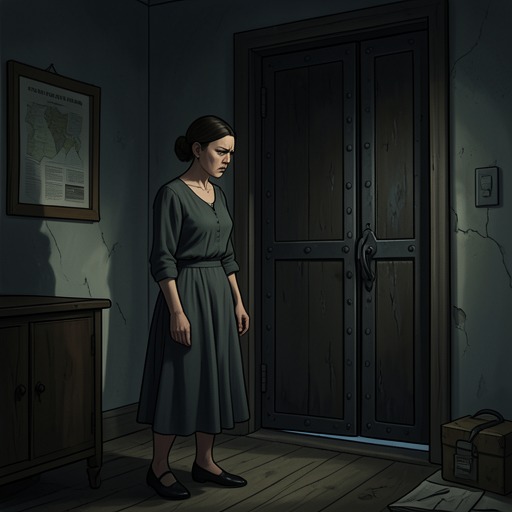
At the villa, Bohdan is described as old, tall, and very lean. His work makes him a familiar presence in the garden, where the children gather beneath the willow and where Torquil, the family tortoise, also appears. The domestic setting does not erase the coercion surrounding him: his position in the garden is a camp prisoner’s assigned existence, not evidence that he has escaped the camp’s power.
Life at the Villa and Relationships
Bohdan is a favourite of the Doll girls. When Thomsen first visits, Hannah points him out as the professor and speaks of his former life; the girls’ attachment to him is later made clear by their distress when they believe Torquil has died. Bohdan’s place in the household is therefore more than a worker’s: he is known to the children, and the garden is a shared space in which his relationship with them and their pet becomes visible.
He also looks after Dov Cohn, a fifteen-year-old German Jewish prisoner whom Hannah describes as very close to him. She uses the word Pikkolo for Dov: in this context it can mean a young companion or charge whom an older prisoner watches over, rather than a sexual relationship. Dov sometimes appears in the Dolls’ garden and is assigned to Block 4(vi) in the camp’s records. The account presents Bohdan’s care for him as a meaningful bond within an otherwise coercive system; it does not explain how the two first met or how long they had been together.
That bond also shapes the later account of Bohdan’s final morning at the villa. Dov knows what happened, and Thomsen’s inquiry eventually reconstructs the scene through information associated with him. Bohdan’s ties to the household and to Dov thus connect the garden’s apparently ordinary routines to the violence of the camp beyond it.
The Tortoise and the Accusation
For a time, the girls are told that Torquil has gone missing. They plan to search the garden at dawn, unaware that Paul Doll has told Hannah that Bohdan killed the tortoise with his shovel. Doll repeats the accusation when Hannah asks after Bohdan, presenting his transfer and the animal’s death as settled matters. His dismissive response to the transfer makes the power imbalance unmistakable: Bohdan can be sent away, while Doll controls the story told about why.
Thomsen doubts that story. In a letter asking for help, he identifies Bohdan as Professor Bohdan Szozeck and says that the alleged killing seems so out of character that he has begun to doubt what he has been told. He also explains that the girls are inconsolable and that he had concealed the tortoise’s apparent death by telling them it had merely gone missing. His request is not abstract concern: he asks for a service because he believes there is no one else he can approach.
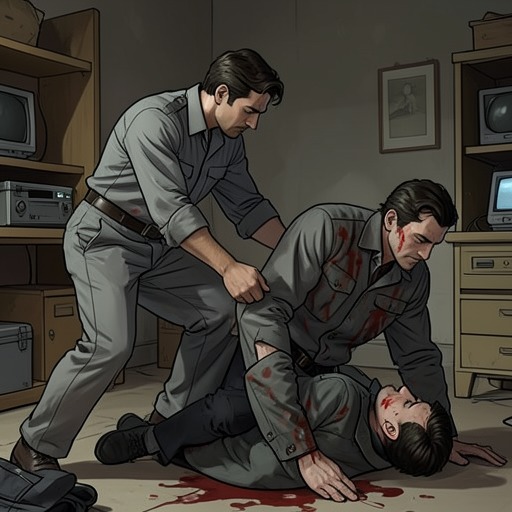
The later reconstruction reverses Doll’s accusation. On the morning in question, Bohdan reaches the villa garden at about half past nine after going to the Ka Be to have the dressing changed on his infected knee. He is in the conservatory when Doll reels through the glass doors from the breakfast room, wearing pyjamas and holding one hand to his face. In the blue-and-white stripes, with his stomach still fat and his clothes still clean, Doll initially strikes Bohdan as a newly arrived prisoner, drunk, mad, or disoriented. Then Doll appears to notice Torquil crossing the lawn, takes up a shovel, and brings its flat blade down hard on the tortoise’s shell. The account therefore places the killing in Doll’s hands, not Bohdan’s.
Transfer and Narrative Significance
Bohdan’s transfer to Stutthof is reported as arbitrary: Doll says that he and about two hundred others were sent there. Thomsen’s letter likewise calls the transfer arbitrary and links his concern to the doubtful accusation. The evidence does not confirm whether Thomsen’s appeal succeeds, whether Bohdan survives, or whether he returns. His story remains suspended at the point where someone tries to challenge the official version but cannot control the machinery carrying him away.
Thomsen’s attempted reconstruction offers a possible explanation for how the false story gained force. He suspects that Hannah struck Doll during a serious marital altercation, leaving bruises that Doll later needed to explain; Bohdan may then have attracted Doll’s attention, after which Doll invented the shovel story and passed instructions to Lagerführer Prufer and the Punishment Commando. Thomsen presents this as the likeliest sequence he can infer, not as an established account. Its uncertainty matters: the reader can see the accusation collapse in the reconstruction of Torquil’s death, yet the exact chain that turns Doll’s violence into Bohdan’s punishment remains partly conjectural.
Bohdan’s role is consequently defined by the gap between what he is accused of and what the evidence shows, and by the distance between his former professorship and his constrained life as a gardener. The tortoise’s death is at once a concrete act of violence and the pretext around which Doll’s authority operates. Bohdan receives no narrated vindication or resolution; instead, his transfer exposes how readily a powerful man’s account can displace the truth, even when those closest to the scene have reason to doubt it.